Executive Summary
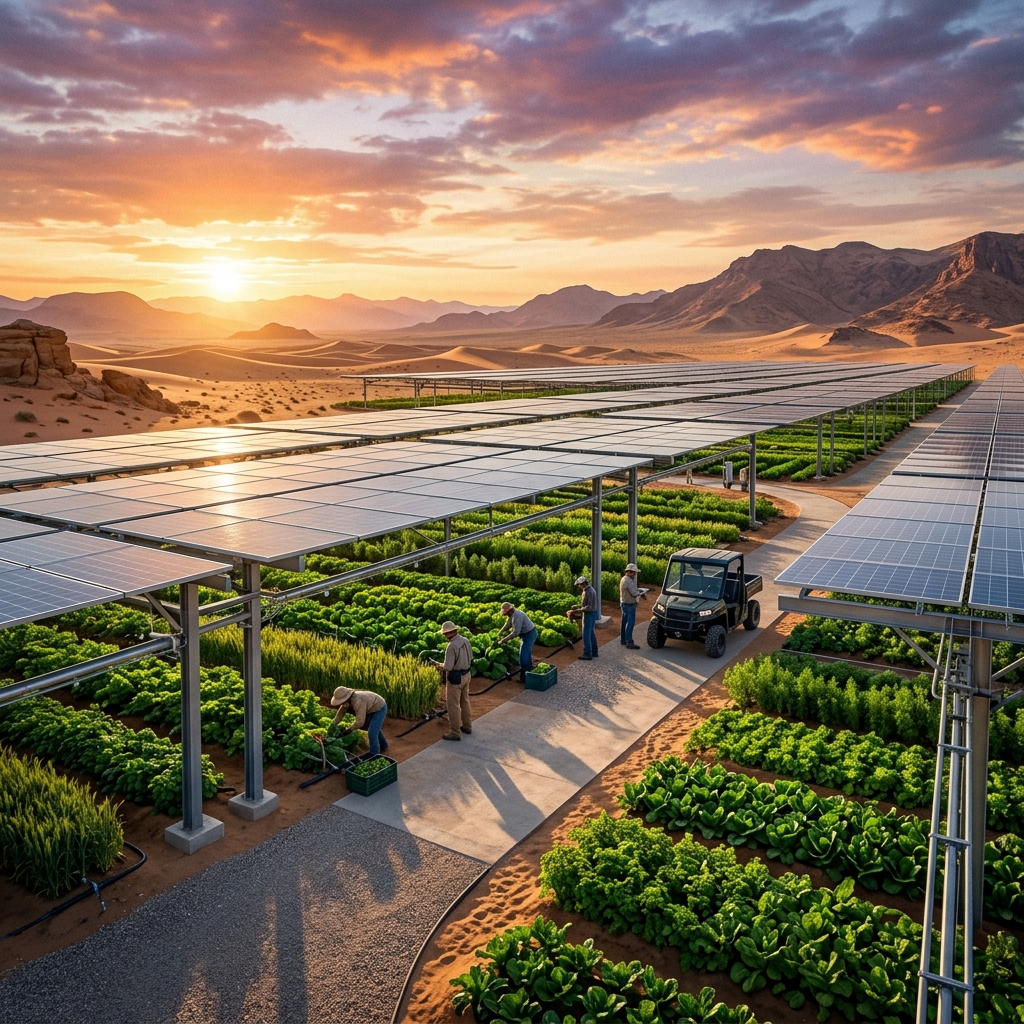
Energy Forest is an AI-enabled agrivoltaic technology company developing climate-resilient Food–Energy–Water systems for arid regions. The company combines agrivoltaic infrastructure, AI-powered digital twins, and smart irrigation technologies to increase agricultural productivity while reducing water consumption and generating renewable energy.
The timing is validated by the strongest current science. A February 2026 peer-reviewed review published in MDPI Sustainability — synthesizing over 140 interdisciplinary studies — confirms that agrivoltaic systems in water-scarce, high-irradiance environments such as Qatar deliver greater technical advantages than deployments in humid, lower-irradiance regions. A 2025 Sorbonne University study comparing dry and wet climate agrivoltaic performance reached the same conclusion: arid, high-solar regions are the optimal deployment environment, not a challenging edge case. The MENA agrivoltaic market is independently projected to grow from USD 1.4 billion in 2025 to USD 6.9 billion by 2031, with GCC sovereign wealth fund partnerships already funding commercial-scale systems in Bahrain, Oman, and the UAE.
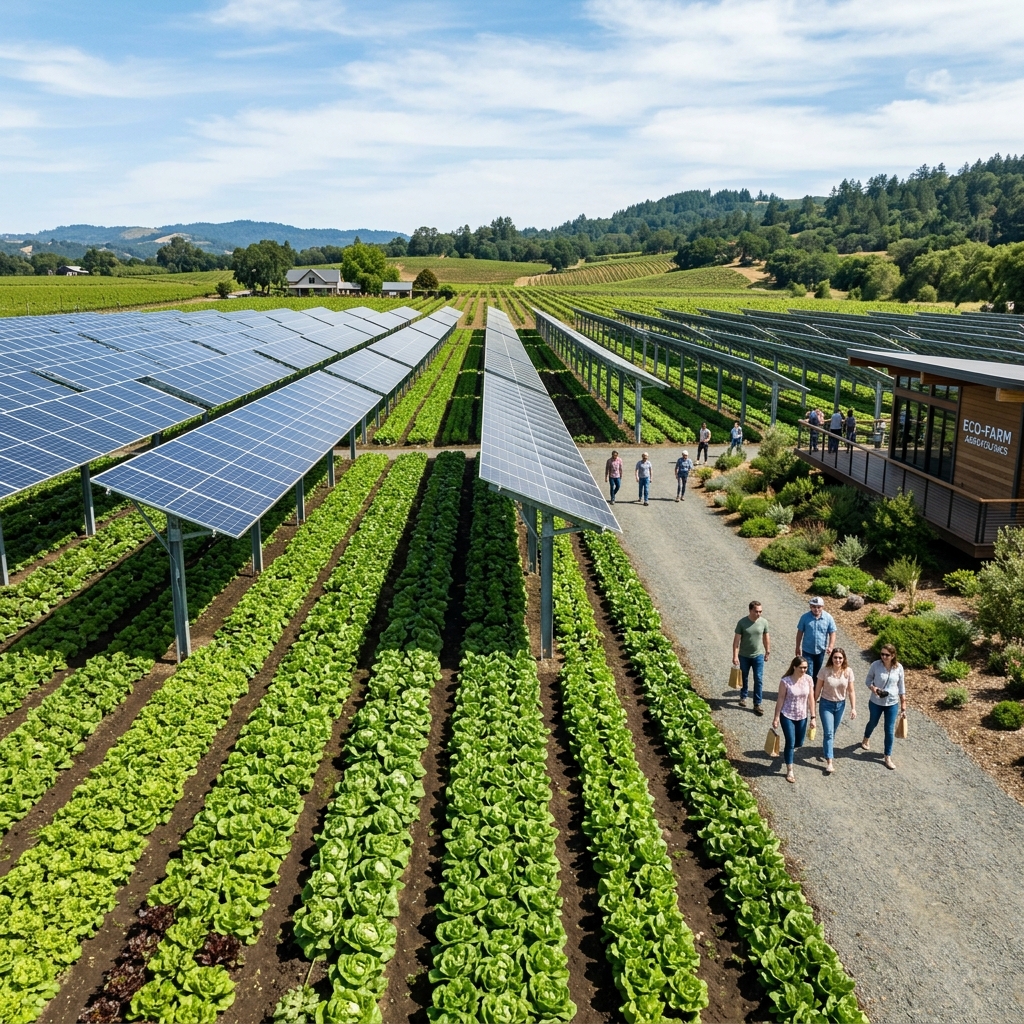
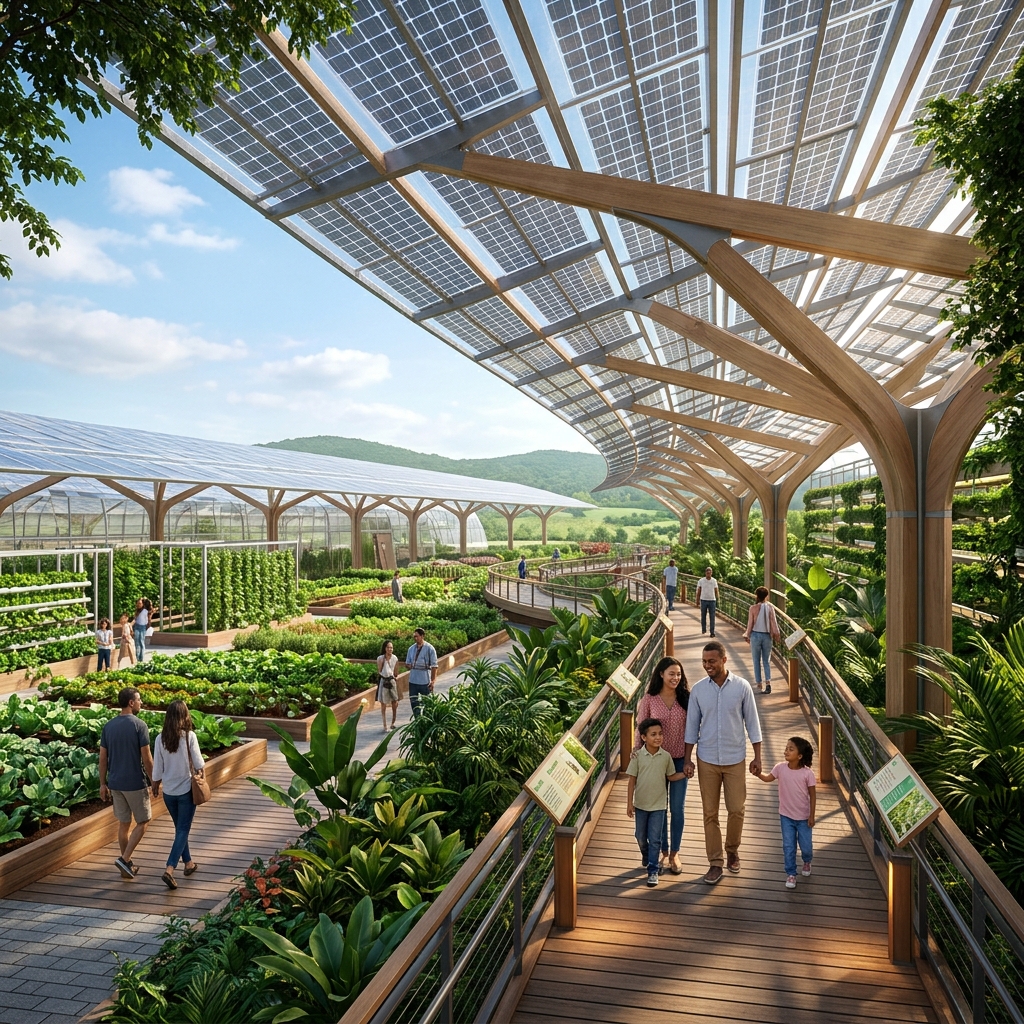
Energy Forest is not purely a production facility. The site is designed as a public-facing destination: a shaded forest-style walkway, family rest areas, a farm-to-table produce experience, and real-time visitor displays of live energy and water data. This visitor layer aligns with Qatar's ecotourism direction and transforms the project into a dual-purpose asset — a working climate technology pilot and an educational landmark for Doha.
The MVP is a monitored pilot producing measurable, peer-reviewable data on yield, water efficiency, energy output, and microclimate performance across two full crop cycles, with a structured visitor and education program running in parallel. If validated, the model becomes a standardized replication package for GCC and MENA expansion, and the foundation for sovereign wealth fund investment at commercial scale.

The Problem
1.1 Land Scarcity and Competing Demands
Solar energy development and agricultural expansion compete directly for Qatar's extremely limited arable land. Conventional ground-mounted solar installations displace food production entirely. Conventional open-field agriculture, without shade protection, suffers extreme heat stress and excessive evaporative water loss in temperatures regularly exceeding 40°C during Qatar's summer months. A February 2026 ORF Middle East policy analysis describes this as a land-use paradox: the GCC countries with the most solar resource are simultaneously the most water-stressed and food-insecure, making the trade-off between energy and food production particularly acute and costly.
1.2 Water Stress
Qatar has one of the world's lowest natural freshwater renewal rates. Average monthly rainfall is below 15 mm, and the country is near-totally dependent on energy-intensive desalination for both drinking water and agricultural irrigation. Every cubic meter of water applied to open-field crops in Qatar's summer climate requires energy to desalinate and then loses a substantial proportion to evaporation before it reaches plant roots. Any viable scaled food production model must structurally reduce water demand per kilogram of crop output, not simply manage existing demand more efficiently.
1.3 Food Import Dependence
Qatar's National Food Security Strategy 2030 sets a target of 55% self-sufficiency in vegetable production — a dramatic increase from a 2017 baseline of 72% overall food import reliance. Qatar has made real progress: 950 productive farms are now operational, and organic farming area doubled in 2024. However, scaling vegetable production in extreme heat without a fundamentally different approach to land use, water management, and microclimate control is the core unsolved challenge. The existing farm base cannot reach the 2030 target without a technology step-change.
Energy Forest directly advances two of the four pillars of Qatar National Vision 2030: economic diversification — by building indigenous technology capability and reducing import dependency — and environmental sustainability, by structurally reducing water consumption, generating renewable energy, and producing a replicable model for climate-resilient food production across the GCC.
1.4 Absence of a Validated Local Agrivoltaic Model
Despite the global growth of agrivoltaics — a USD 5.1 billion market in 2026 projected to reach USD 8.65 billion by 2030, with over 2,800 installations across 20 countries — no validated, publicly documented agrivoltaic pilot exists in Qatar. Commercial-scale deployments are now beginning across the GCC through sovereign wealth fund partnerships, but these are large industrial systems without the research instrumentation, visitor infrastructure, or educational components that would serve Qatar's knowledge economy goals and QSTP's mandate. A local research-grade pilot producing verified, Qatar-specific performance data is the missing evidence layer that enables credible scale-up.
The Solution
Energy Forest is an integrated agrivoltaic system combining four functional layers on a single site, each generating independent value while reinforcing the others.
- Layer 1: Solar energy generation via elevated bifacial PV panels at 3.5 m height.
- Layer 2: Shade-optimized crop production beneath the panel array.
- Layer 3: AI-powered digital twin platform — predictive irrigation, microclimate simulation, and performance analytics.
- Layer 4: Public visitor experience: shaded forest walkways, family rest areas, farm-to-table engagement, and live data displays.
2.1 Panel Configuration — Why Elevated Bifacial
Panel configuration is a critical design decision with direct consequences for both energy yield and crop performance. The February 2026 MDPI Sustainability review critically examines fixed-tilt, tracking, bifacial, semi-transparent, and vertical configurations and their differential effects on crop productivity and microclimate in Middle Eastern conditions. For vegetable production in hot arid conditions, elevated fixed-tilt bifacial panels at 3.0–4.0 m height represent the current best-practice specification: sufficient elevation for air circulation and mechanized crop maintenance, bifacial surface for energy yield optimization, and a ground cover ratio of 60–70% to deliver adequate shade without excessive light exclusion. The 3.5 m elevation specifically is validated by a 2025 Netherlands study of a 1.2-hectare strawberry agrivoltaic system at this exact height, demonstrating 35% light transmission to the crop — within the optimal range for high-value leafy vegetables.
Semi-transparent spectrally selective panels are under consideration for a dedicated research sub-plot. PMC-published research demonstrates that semi-transparent PV modules producing approximately 50% light transmission cause minimal yield reductions for lettuce and measurable biomass improvements for basil, making them a strong candidate for crop-specific testing within the pilot alongside the primary bifacial configuration.
2.2 The AI Digital Twin — Specific Architecture
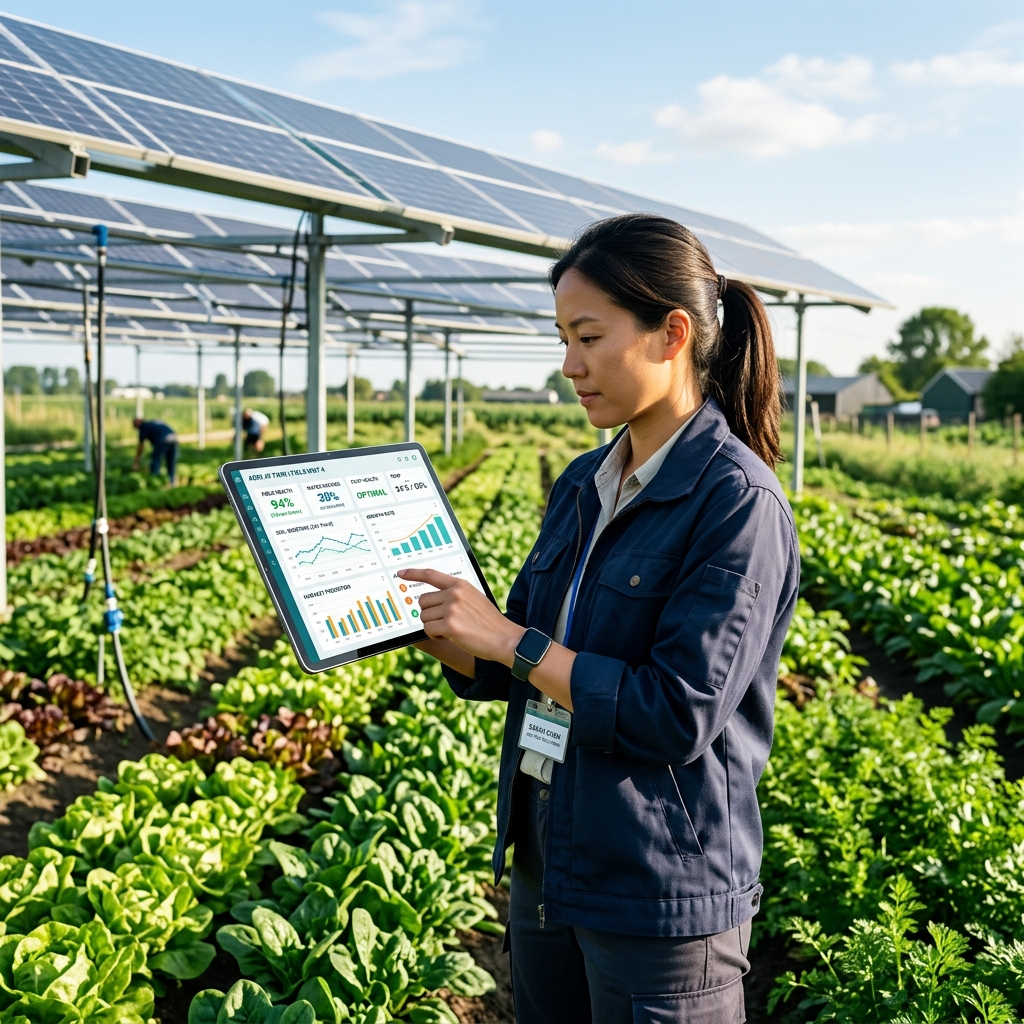
The AI component of Energy Forest is not automation relabeled as artificial intelligence. It refers to a predictive digital twin: a live simulation of the site updated continuously by sensor data that forecasts soil moisture, temperature, and irrigation demand 24–72 hours ahead and models expected yield under different irrigation and climate scenarios. The system performs three specific functions:
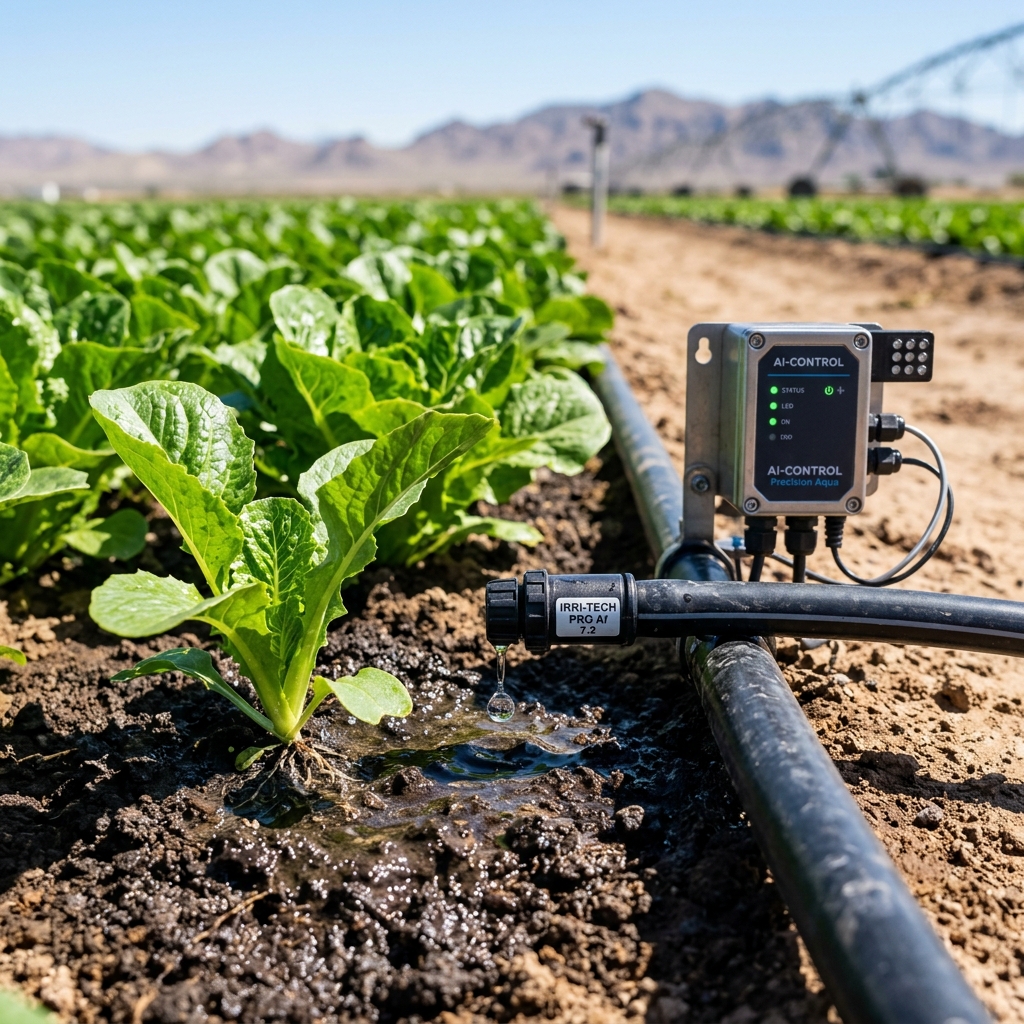
- Predictive irrigation scheduling — applying water based on forecast soil moisture deficit rather than fixed schedules, reducing over-irrigation and water waste. A 2025 ScienceDirect review of AIoT applications in precision agriculture confirms that AI-driven irrigation systems achieve water use reductions of 20–50% compared to conventional scheduled irrigation in comparable climates.
- Anomaly detection — continuous monitoring for sensor drift, equipment failure, abnormal temperature spikes, or unusual crop stress patterns, enabling rapid operational response before yield damage occurs.
- Performance simulation — modeling expected crop yield and energy output under different climate and irrigation scenarios, enabling data-driven operational decisions and producing the investor-grade performance reporting required for commercial scale-up.
The visitor-facing output of this system — a simplified live display showing "Solar energy generated today," "Water saved today," and "Temperature under panels vs. outside" — costs nothing additional but transforms the site into an interactive educational exhibit rather than a fenced technical installation.
10. Pilot Plan and Work Program
| Phase | Timeline | Key Activities |
|---|---|---|
| Phase 1: Design and Build | Months 1–5 | Finalize site, engineering, and panel specification. Commission sensor architecture. Build digital twin prototype on synthetic data. Install solar structure, irrigation, and crop zones. Construct walkways, rest areas, and visitor-safe separation. |
| Phase 2: First Crop Cycle | Months 5–9 | Plant all five varieties plus open-field control plots. Collect continuous environmental, water, yield, and energy data. Controlled access only. Calibrate sensors and begin training AI irrigation model on live data. |
| Phase 3: Second Cycle and Visitor Program | Months 9–14 | Open visitor walkway, farm-to-table program, and school tour bookings. Launch corporate sustainability visit packages. Continue full data collection. Compare second-cycle results to first cycle and to control plots. |
| Phase 4: Validation and Scale Package | Months 14–18 | Analyze full dataset. Publish pilot performance report. Produce platform replication package: specifications, sensor kit, irrigation layout, digital twin configuration, visitor path design. Begin GCC investor and partner discussions. |
3. Research Foundation
Energy Forest is built on a coherent body of current peer-reviewed evidence. Every technical and agronomic claim in this proposal has a source.
3.1 Arid Regions Are the Optimal Agrivoltaic Environment
A May 2025 study from Sorbonne University published in Agricultural and Forest Meteorology compared agrivoltaic performance across dry climates (Spain) and wet climates (Netherlands) and found that dry regions with high solar radiation deliver more technical advantages than humid regions with abundant rainfall. A 2025 meta-analysis published in Agronomy for Sustainable Development, reviewing the complete agrivoltaic literature, confirms that the greatest potential for agrivoltaics lies in semi-arid and arid regions, where solar panel shade produces synergistic benefits — reduced evapotranspiration, improved soil moisture retention, and moderated crop microclimate. The February 2026 MDPI Sustainability review synthesizing 140+ studies specifically for Middle Eastern conditions reaches the same conclusion. Qatar is not a difficult deployment context for agrivoltaics. It is the optimal one.
3.2 Documented Crop Performance
A landmark University of Arizona field study in the Sonoran Desert documented that lettuce production tripled and water use fell 65% under agrivoltaic panels in arid conditions — the most cited result in the agrivoltaic literature and directly relevant to Qatar's climate. A 2025 ScienceDirect systematic review confirmed that romaine lettuce production is enhanced during hot summers under agrivoltaic systems, with the economic value of the lettuce crop approximately four times the economic value of the equivalent agrivoltaic-generated electricity on the same land area. Published research across hundreds of field trials has confirmed positive or neutral performance for basil, cherry tomatoes, peppers, spinach, kale, and Swiss chard under partial shade in hot-climate conditions.
3.3 Land Use Efficiency
NREL research confirms that co-locating solar panels with agriculture can boost land use efficiency by 60–200% measured by the Land Equivalent Ratio (LER). A LER greater than 1.0 — the standard agrivoltaic performance benchmark — indicates that combined food and energy production on a given land area outperforms separate single-use deployments of equivalent area. Chinese research on Even-lighting Agrivoltaic Systems documented an average LER of 1.64 for common vegetables, with comprehensive economic benefits increasing farmers' income by an average of 5.14 times compared to agriculture alone.
3.4 Market Sizing — TAM, SAM, SOM
TAM — Total Addressable Market: USD 8.65 billion by 2030 (Global). The global agrivoltaics market is valued at USD 5.18 billion in 2025 and projected to reach USD 8.65 billion by 2030 at a 10.8% CAGR. This represents the total global demand for agrivoltaic systems, technology, and associated services — the ceiling against which Energy Forest's platform licensing model ultimately scales.
SAM — Serviceable Available Market: USD 6.9 billion by 2031 (MENA). A February 2026 ORF Middle East analysis projects MENA agrivoltaic market growth from USD 1.4 billion in 2025 to USD 6.9 billion by 2031, framing the technology as a triple-gain opportunity across the food-energy-water nexus. This is Energy Forest's primary geographic target — a regional market where the technical advantages of agrivoltaics are greatest, sovereign wealth capital is actively deploying, and the policy environment in Qatar, UAE, Oman, Bahrain, and Saudi Arabia is aligned. GCC sovereign wealth partnerships have already unlocked commercial-scale agrivoltaic systems in Bahrain, Oman, and the UAE, validating the regional investment thesis. Qatar — with 1,675 MW of solar already operational toward a 4,000 MW target, a National Food Security Strategy mandating 55% vegetable self-sufficiency, and a Third National Development Strategy running 2024–2030 — is the natural next deployment in this GCC pattern.
SOM — Serviceable Obtainable Market: USD 45–90 million (Qatar and GCC, Years 1–5). Energy Forest's immediate obtainable market is defined by three specific capture opportunities over the 3–5 year horizon. First, Qatar's national food security infrastructure program: a government-mandated drive toward 55% vegetable self-sufficiency that requires technology-enabled production models. Second, GCC pilot replication: at a capital cost of USD 130,000–280,000 per site, even conservative penetration of 20–40 pilot and early commercial deployments across Qatar, UAE, and Bahrain in Years 3–5 represents USD 2.6–11 million in infrastructure and platform contracts. Third, digital twin platform licensing: the software layer scales independently of site construction, with a target of 5–10 licensed deployments by Year 5 at USD 45,000–90,000 per license generating USD 225,000–900,000 in recurring software revenue. Combined, these near-term capture opportunities represent an obtainable market of USD 45–90 million within the 5-year horizon — a credible target from a validated Qatar pilot position.
3.5 AI and Precision Irrigation
A 2025 ScienceDirect review of AIoT applications in precision agriculture establishes that AI-driven irrigation systems reduce water use by 20–50% through predictive scheduling, real-time soil sensing, and plant stress detection. The review confirms that sensor networks combined with machine learning models enable operational response to changing field conditions faster and more precisely than human monitoring allows. This literature base directly informs the Energy Forest digital twin design and supports the water-saving projections in the financial model below.
3.6 ICARDA Regional Program
The International Center for Agricultural Research in the Dry Areas (ICARDA) is conducting an active MENA agrivoltaic research and pilot program highlighted as a flagship innovation on World Water Day 2025. ICARDA's approach — collective low-energy drip irrigation paired with solar panels across MENA dryland settings — directly parallels the Energy Forest model and represents a potential research partner. Their participatory, farmer-centered approach also informs the visitor and community engagement design of the pilot.
4. Crop Selection — Evidence-Based
Crop selection is the most critical agronomic decision in an agrivoltaics pilot and is too often left vague in proposals. The following five crops are selected against three explicit criteria: demonstrated shade tolerance in hot climates supported by published research, commercial value in Qatar's food market, and growing cycle length compatible with a 12-month pilot window.
| Crop | Shade tolerance | Arid AV evidence | Qatar market value | Cycle |
|---|---|---|---|---|
| Romaine lettuce | High — equal or greater yield vs. open field in heat | Tripled yield, 65% water reduction (Sonoran Desert, Barron-Gafford 2019); enhanced hot-summer production confirmed (ScienceDirect 2025) | High — year-round restaurant and retail demand | 45–60 days; 4–5 cycles/year |
| Basil | High — significant growth improvement under PV shade | Enhanced biomass under semi-transparent PV (PMC 2024); positive performance confirmed (Wiley 2025) | Premium — hotel and restaurant herb supply chains | 60–70 days; continuous harvest |
| Cherry tomatoes | Moderate — heat stress reduction under shade improves fruit set | Positive yield under AV in hot climates (AgriVoltaics World Conference 2024); 65% yield increase documented in Arizona case | Very high — core Qatar food demand; farm-to-table premium | 80–100 days |
| Spinach | High — shade delays bolting, extends harvest window in summer heat | High compatibility confirmed (Sustainability Atlas 2026) | Moderate-high — growing health food segment | 40–50 days |
| Swiss chard | High — heat-tolerant, robust AV performance across multiple studies | Confirmed in Trommsdorff et al. and multiple European AV trials | Moderate — institutional catering, Qatari home market; QAR 4/kg documented | 50–60 days; continuous harvest |
A control plot of equivalent area grown under open-field conditions will run simultaneously with each crop variety throughout the pilot. All yield comparisons and water use figures will be referenced against this live control baseline — not against literature extrapolation from other geographies.
5. Core Intellectual Property
Energy Forest's primary innovation is its AI-powered Agrivoltaic Digital Twin Platform, designed specifically for arid and desert climates.
The platform integrates six functional modules operating as a unified real-time system:
- Solar production forecasting — predicting panel energy output 24–72 hours ahead using weather data, irradiance sensor readings, and dust accumulation models calibrated for Qatar's specific atmospheric conditions. This enables proactive grid management and energy dispatch decisions.
- Crop growth modeling — simulating crop development trajectories based on current temperature, humidity, soil moisture, and light levels under the panel array. The model flags predicted yield deviations early, enabling corrective action before harvest-stage losses occur.
- Irrigation optimization — dynamically scheduling water application based on real-time soil moisture data, weather forecasts, crop growth stage, and evapotranspiration models. Eliminates fixed-schedule over-irrigation and reduces water consumption by a targeted 20–50% versus conventional approaches, validated by 2025 ScienceDirect AIoT precision agriculture research.
- Soil moisture prediction — forecasting subsurface moisture levels 24–48 hours ahead using sensor time-series data and machine learning models trained on local soil characteristics. This enables proactive irrigation adjustments rather than reactive responses to moisture stress.
- Microclimate simulation — modeling the temperature, humidity, and irradiance environment beneath and between panels in real time, producing a spatial map of microclimate conditions across the crop zone. This is the data layer that enables panel height and orientation optimization specific to Qatar's extreme summer conditions — a capability no existing commercial platform has validated in this climate.
- Performance analytics — generating automated weekly and monthly reports on Land Equivalent Ratio, water use efficiency, energy yield, crop yield per m², and carbon displacement. These reports serve QSTP and research partners during the pilot phase and become the investor-grade performance evidence required for commercial-scale fundraising.
Data Maturity and the AI Development Pathway
Sophisticated reviewers will correctly ask how an AI platform functions on Day 1, before any proprietary field data exists. The answer is a deliberate two-cycle development pathway. In Cycle 1, the digital twin operates on pre-validated deterministic evapotranspiration models — specifically the FAO-56 Penman-Monteith framework, the global standard for arid-region crop water demand calculation — combined with live API weather data and manufacturer panel specifications. This deterministic foundation delivers reliable, actionable irrigation scheduling from the first day of operation, with no dependence on historical local data. By Cycle 2, as the pilot generates a proprietary, site-specific time-series dataset of soil moisture, temperature, crop growth, and panel performance readings across a full Qatar seasonal cycle, the system transitions into a localized machine learning model trained entirely on in-situ arid agrivoltaic conditions. No generic platform trained on temperate-climate farm data can replicate this. The Qatar-calibrated model creates a compounding accuracy advantage that deepens with every additional crop cycle — the core defensibility of the platform at commercial scale.
Commercial IP Protection
Energy Forest welcomes academic partnerships with HBKU, Qatar University, and ICARDA as validation accelerators, not as IP contributors. The commercial protection structure is non-negotiable and established before any partnership is formalized. Academic partners will be granted non-commercial data rights for peer-reviewed publication — an arrangement that benefits Energy Forest through independent third-party validation of pilot results. However, the core software architecture, trained machine learning model weights, calibration datasets, and all commercial platform licensing rights are firewalled entirely under Energy Forest's ownership via strict Joint Research Agreements (JRAs) executed prior to data sharing. These JRAs explicitly exclude academic partners from any commercial licensing, sub-licensing, or technology transfer of the platform or its derivative models. The validated pilot dataset from Qatar — the world's first publicly documented agrivoltaic performance record for this climate — is an Energy Forest proprietary asset. Academic publications cite it; they do not own it.
This technology creates a scalable software layer that can be licensed across agricultural and renewable energy projects throughout Qatar, the GCC, and the broader MENA region. The platform is the asset that transforms Energy Forest from a single-site agrivoltaic operator into a technology company with recurring software revenue independent of any individual farm's performance. Each licensed deployment of the platform on a new site generates data that further trains the underlying models, creating a compounding accuracy advantage for Energy Forest's system compared to any competitor deploying a generic irrigation or farm management tool not specifically trained on arid agrivoltaic conditions.
The intellectual property strategy has three layers: the trained machine learning models and their calibration data (proprietary, site-specific, and geography-specific); the platform architecture and API integrations connecting sensor hardware to the digital twin; and the validated performance dataset from the Qatar pilot, which constitutes the world's first publicly documented agrivoltaic performance record for Qatar's specific climate and solar conditions.
7. Environmental Impact
Energy Forest delivers measurable positive environmental outcomes across four dimensions, all quantified.
7.1 Water Conservation
Agrivoltaic shading reduces evapotranspiration by reducing the solar energy available to drive soil evaporation and plant transpiration. NREL research confirms crop water demand reductions of 20–50% in arid agrivoltaic climates. At the pilot scale (1,500 m² active crop zone), a conservative 30% irrigation reduction saves approximately 240 m³/year of treated desalinated water. At commercial scale (1 hectare), this becomes 1,440 m³/year — equivalent to the water content of approximately 1.4 million standard drinking water bottles, produced and saved annually.
7.2 Renewable Energy and Carbon Reduction
The 50 kW pilot system generates approximately 80,000–88,000 kWh of renewable electricity annually, displacing gas-fired grid power. Qatar's updated NDC commits to reducing greenhouse gas emissions by 25% by 2030 relative to a business-as-usual scenario. The pilot contributes to this trajectory and simultaneously generates empirical performance data on bifacial panel efficiency under Qatar's specific dust loading and heat conditions — data directly useful to KAHRAMAA and QatarEnergy for future deployment planning.
7.3 Land Use Efficiency
By producing both food and energy on the same land footprint, Energy Forest removes the either/or constraint of conventional land use. A target LER of 1.2 means 20% more combined value from the same land area than separate uses. Research documents LER values of 1.4–1.64 for comparable vegetable agrivoltaic systems, suggesting the target is conservative. In Qatar, where every square meter of potentially productive land has multiple competing uses, this efficiency gain has direct national significance.
7.4 Local Food Supply Chain
Qatar currently imports the majority of its fresh vegetables — USD 448 million from Spain alone in 2024, and USD 47 million from the EU. Each kilogram of lettuce, basil, or tomatoes grown locally under Energy Forest's solar canopy and delivered same-day to Doha restaurants eliminates the refrigerated air-freight emissions embedded in that imported kilogram. At commercial scale, this substitution effect becomes quantifiable and reportable as scope 3 carbon reduction for the restaurants and hotels purchasing the produce.
8. Tourism and Visitor Experience
8.1 Forest Walk Experience
The forest walk creates a landscaped, shaded circulation path through the agrivoltaic site where visitors experience outdoor movement in Qatar's summer climate under the natural combined canopy of solar panels and growing crops. Interpretive stations at each crop zone explain the technology, the science, and the food story in both Arabic and English. The experience is designed to be genuinely immersive — not a fenced industrial installation with a viewing platform, but a walkable, sensory farm environment.
8.2 Family Rest Areas
Shaded seating nodes every 30 meters along the walkway, with drinking water access, accessible pathways, and designated safe stopping points for children and elders. These features make the site suitable for school trips, family visits, and mixed-age community events — broadening the audience and revenue base beyond specialists and corporate visitors.
8.3 Farm-to-Table Experience
Visitors tour the crop zone, observe the harvest process, understand the food-energy-water connection directly, and can purchase or taste produce grown under the solar panels that day. This creates a direct, visible link between the technology and the food on the table. It also creates a premium revenue stream: produce sold farm-to-table at 20–40% above wholesale price, to visitors who have just watched it grow.
8.4 Real-Time Data Transparency
Live screens at visitor rest points display: solar energy generated today (kWh), water saved versus a conventional farm today (liters), temperature under panels versus outside (°C differential), and total crop weight harvested this week (kg). This turns the AI digital twin's sensor network into a public communication tool and gives journalists, corporate visitors, and government officials a clear, shareable data story with every visit.
8.5 Educational and Eco-Tourism Alignment
Qatar's Ministry of Environment and Climate Change emphasizes conservation, sustainable practices, infrastructure improvement, and educational visitor experiences as the pillars of its ecotourism direction. Energy Forest aligns with all four. Potential visitor segments include school and university groups (curriculum-aligned STEM content), corporate sustainability events (ESG reporting and employee engagement), government and diplomatic visitors (showcase for Qatar's climate action), families (weekend outdoor activity in a shaded, safe environment), and international researchers (site visits and data access partnerships).
11. Performance Metrics
Core Agricultural Metrics
- Crop yield per m² (kg fresh weight) per variety — agrivoltaic versus open-field control
- Land Equivalent Ratio (LER) — target > 1.2; benchmark range 1.4–1.64 from comparable systems
- Irrigation water use (m³/kg fresh weight) — agrivoltaic versus open-field control
- Soil moisture stability (variance of volumetric water content over time)
- Growing cycle duration (days from planting to harvest)
Core Energy Metrics
- Solar energy output (kWh/month/m² of panel area)
- System uptime (% of time fully operational)
- Panel temperature performance versus manufacturer specifications in Qatar dust and heat conditions
Environmental Metrics
- Evapotranspiration reduction (estimated water saving from microclimate effect)
- Carbon intensity of electricity generated (kgCO₂-equivalent displaced per kWh)
- Irrigation water saved versus control (m³/year absolute and per kg crop)
Platform and Technology Metrics
- Digital twin forecast accuracy: soil moisture prediction error (target < 5% RMSE)
- Irrigation scheduling efficiency: actual vs. recommended water application variance
- Anomaly detection response time: minutes from sensor alert to operator notification
- Platform uptime: target > 99.5% availability
Financial and Commercial Metrics
- Revenue per stream (monthly and annual versus projection)
- EBITDA versus plan
- Cost per kilogram of crop produced versus open-field control
- Platform licensing pipeline: number of qualified GCC prospects by end of Year 2
Visitor Experience Metrics
- Total visitor count per month by segment
- Farm-to-table revenue per month
- Visitor satisfaction survey score
- Online booking conversion rate
Financials
This section presents a complete investment-grade financial analysis for the Energy Forest pilot and commercial-scale projection. All figures are in USD unless stated. QAR/USD conversion used: 3.64.
6.1 Key Assumptions and Data Sources
- Pilot site area: 2,000 m² (0.2 hectare) of active agrivoltaic area plus 500 m² visitor infrastructure. This is a deliberately modest MVP scale that can be hosted within QSTP Education City grounds.
- Panel system: 50 kW peak bifacial fixed-tilt elevated installation. At Qatar's average solar irradiance of 5.5–6.0 peak sun hours per day and a system efficiency of 80%, this generates approximately 80,000–88,000 kWh annually.
- Qatar electricity context: KAHRAMAA's BeSolar net billing mechanism pays QAR 0.237/kWh (USD 0.065/kWh) for surplus solar electricity injected into the grid (Enerdata, 2025). Commercial electricity rate is QAR 0.130/kWh (USD 0.036/kWh) per GlobalPetrolPrices September 2025 data. Self-consumed solar displaces grid purchases at QAR 0.130/kWh; exported surplus earns QAR 0.237/kWh.
- Crop yield assumptions: Based on agrivoltaic literature for shade-tolerant crops in hot climates. Conservative baseline of 3.5 kg/m² per cycle for leafy greens (lettuce, spinach, chard), 2.5 kg/m² per cycle for basil, and 4.0 kg/m² per cycle for cherry tomatoes. Lettuce runs 4 cycles per year; basil and chard 3 cycles; cherry tomatoes 2 cycles. Weighted average across the five-crop mix: approximately 10 kg/m²/year total production from the 1,500 m² active crop zone.
- Qatar produce prices (retail): Lettuce QAR 3.50/kg, spinach QAR 5.00/kg, chard QAR 4.00/kg, basil QAR 12.00/kg (herb premium), cherry tomatoes QAR 8.00/kg. Weighted average blended price across crop mix: approximately QAR 6.00/kg (USD 1.65/kg). These are conservative retail references; farm-to-table and restaurant-direct pricing commands a 20–40% premium on these figures.
- Water cost savings: Qatar desalinated water for agriculture costs approximately USD 1.50–2.50/m³. A 30% irrigation reduction from AV shade and AI scheduling on a pilot consuming an estimated 800 m³/year baseline saves approximately 240 m³/year, valued at USD 360–600/year at pilot scale.
- Tourism and education revenue: Conservative assumption of 30 guided visits per month at an average revenue of USD 15 per visitor generating USD 5,400/year in Year 2 when the visitor program is fully operational.
6.2 Pilot Phase Capital Expenditure (CapEx)
| Category | Low (USD) | High (USD) | Basis |
|---|---|---|---|
| Solar PV panels — 50 kW bifacial | 18,000 | 28,000 | USD 0.95–1.23/W utility benchmark (DOE 2025); elevated AV structure adds 4–52% vs. ground-mount |
| Elevated mounting structure at 3.5 m | 22,000 | 40,000 | Fraunhofer ISE AV cost benchmark; structure premium over standard ground-mount |
| Inverter, wiring, grid connection | 8,000 | 14,000 | Standard commercial solar BOS costs |
| Drip irrigation system, 6 zones + flow meters | 6,000 | 10,000 | Six crop/control zones; pressure-compensating emitters |
| Soil preparation and growing substrate | 3,000 | 6,000 | Amended sandy substrate suitable for Qatar conditions |
| Sensor array (soil, temperature, humidity, irradiance) | 5,000 | 9,000 | Capacitive sensors, data logger, cloud connectivity |
| Digital twin platform development | 8,000 | 18,000 | University research partnership may offset 30–50% of cost |
| Visitor infrastructure (walkways, seating, signage, screens) | 8,000 | 16,000 | Including QR tour system and farm-to-table display area |
| AWG demonstration unit (one panel row) | 3,000 | 6,000 | Technology exhibit; passive atmospheric water harvesting |
| Safety fencing, electrical zone separation | 2,000 | 4,000 | Visitor-safe demarcation of electrical infrastructure |
| Contingency (10%) | 8,300 | 15,100 | Standard project contingency |
| Total CapEx | USD 91,300 | USD 166,100 | Working figure: USD 130,000 |
6.3 Annual Operating Expenditure (OpEx)
| Category | Annual (USD) | Notes |
|---|---|---|
| Crop inputs (seeds, fertilizer, pest management) | 4,200 | Based on USD 2.10/m² for intensive vegetable production |
| Water (treated supply, after AI savings) | 3,800 | 560 m³/year after 30% reduction; USD 2.00/m³ supply cost |
| Site maintenance and cleaning (panels, irrigation) | 2,800 | 1.5–2% of CapEx for solar; plus irrigation and crop systems |
| Staff (part-time agronomist + site technician) | 18,000 | 1.0 FTE equivalent; QSTP ecosystem may provide partial support |
| Platform hosting and IT (digital twin, sensors) | 1,800 | Cloud dashboard, sensor data storage, cybersecurity |
| Visitor program operations | 3,600 | Tour guide time, materials, safety compliance |
| Insurance and compliance | 2,400 | Commercial agricultural and visitor liability coverage |
| Total Annual OpEx | USD 36,600 |
During the pre-revenue validation phase of the 12-month pilot, the calculated average monthly burn rate is tightly controlled at approximately USD 3,050 (OpEx only), minimizing early-stage capital requirements.
6.4 Annual Revenue Projections — Pilot Phase (Year 1–2)
| Revenue stream | Annual (USD) | Basis |
|---|---|---|
| Electricity — self-consumption saving | 2,880 | 80,000 kWh × 30% self-consumed × USD 0.036/kWh saved |
| Electricity — BeSolar net billing export | 3,640 | 80,000 kWh × 70% exported × USD 0.065/kWh |
| Crop sales — wholesale and direct | 24,750 | 15,000 kg × USD 1.65/kg blended weighted average price |
| Farm-to-table and visitor program | 5,400 | 30 visits/month × 12 visitors avg × USD 12.50 net |
| Research data partnership (QSTP/university) | 6,000 | Research contribution from university partner; data licensing |
| Total Annual Revenue | USD 42,670 |
Pilot Year 1 EBITDA: USD 42,670 − USD 36,600 = USD 6,070 (positive from Year 1). This modest positive EBITDA in the first operating year is a meaningful result. The pilot is not intended to be profitable — it is intended to generate validated data — but demonstrating revenue cover of operating costs from Year 1 significantly strengthens the case for investor confidence and QSTP continuation support.
6.5 Five-Year Financial Projection — Path to Commercial Scale
| Metric | Year 1 (Pilot) | Year 2 (Pilot + Visitor) | Year 3 (0.5 ha Commercial) | Year 4 (1.0 ha Commercial) | Year 5 (1.0 ha + Licensing) |
|---|---|---|---|---|---|
| Site area (crop zone) | 1,500 m² | 1,500 m² | 3,500 m² | 7,000 m² | 7,000 m² |
| CapEx cumulative (USD) | 130,000 | 0 | 280,000 | 420,000 | 420,000 |
| Annual OpEx (USD) | 36,600 | 38,000 | 68,000 | 112,000 | 116,000 |
| Electricity revenue (USD) | 6,520 | 6,520 | 15,200 | 30,400 | 30,400 |
| Crop revenue (USD) | 24,750 | 27,225 | 63,525 | 127,050 | 127,050 |
| Tourism and education (USD) | 5,400 | 9,720 | 18,000 | 28,000 | 35,000 |
| Research and data (USD) | 6,000 | 6,000 | 8,000 | 10,000 | 12,000 |
| Platform licensing (USD) | 0 | 0 | 0 | 0 | 45,000 |
| Total Revenue (USD) | 42,670 | 49,465 | 104,725 | 195,450 | 249,450 |
| EBITDA (USD) | 6,070 | 11,465 | 36,725 | 83,450 | 133,450 |
| EBITDA Margin | 14% | 23% | 35% | 43% | 54% |
Year 5 platform licensing revenue reflects the first replication package and digital twin license sale to a GCC partner site. Crop revenue growth assumes 10% yield improvement from the second cycle onward as the AI irrigation model is trained on local field data.
Financials
6.6 Investment Return Analysis
Pilot investment: USD 130,000. Cumulative commercial investment by Year 4: USD 420,000.
| Financial metric | Pilot only | Full 5-year projection |
|---|---|---|
| Payback period | R&D investment — not applicable | 6–8 years, consistent with EU agri-solar benchmark of 6–9 years (SurgePV 2026) |
| IRR (5-year) | N/A | 14–18%, consistent with agrivoltaic business model analysis showing 16–43% ROI (pv magazine USA 2025) |
| NPV at 10% discount rate | — | Positive from Year 4 |
| LER (Land Equivalent Ratio) | Target > 1.2 | Documented range 1.4–1.64 for comparable vegetable AV systems |
| Annual water cost saving at commercial scale | USD 7,200–12,000/year | Based on 30% reduction on 4,800 m³/year baseline at USD 2.00/m³ |
Carbon value (indicative): At Qatar's current grid carbon intensity of approximately 0.47 kgCO₂/kWh, the 1-hectare commercial system generating 400,000 kWh/year displaces approximately 188 tonnes CO₂/year. At a conservative voluntary carbon market price of USD 10–15/tonne, this represents USD 1,880–2,820/year in potential carbon credit revenue — not included in the projections above as a conservative measure.
6.7 Sensitivity Analysis
| Variable | Pessimistic | Base case | Optimistic |
|---|---|---|---|
| Crop yield (% of baseline) | 70% | 100% | 130% |
| Electricity export rate (QAR/kWh) | 0.18 | 0.237 | 0.30 |
| Visitor program revenue | USD 18,000/yr | USD 28,000/yr | USD 42,000/yr |
| Resulting Year 4 EBITDA (USD) | USD 38,000 | USD 83,450 | USD 128,000 |
The pessimistic scenario still generates positive EBITDA at commercial scale, demonstrating that the model is resilient even under significant underperformance of any single revenue stream. This is the structural advantage of the multi-stream revenue design.
6.8 Capital Structure and QSTP Support
| Support type | Purpose | Estimated value |
|---|---|---|
| Pilot site access (land) | 2,000–2,500 m² within or adjacent to Education City | USD 0 in-kind, replacing commercial land lease of USD 8,000–15,000/year |
| Incubation program (12 months) | Co-working space, office, mentorship, prototype support, workshops, and ecosystem access | In-kind services per Full Incubation program |
| QSTP subsidy | Contribution toward CapEx gap | Up to QAR 100,000 (~USD 27,500) per published program terms |
| Research partnership facilitation | Introductions to Qatar University and HBKU | In-kind; reduces platform development cost by 30–50% |
| Investor introductions | QSTP Tech Venture Fund and Qatar Foundation programs | Access to Series A pipeline once pilot is validated |
Equity: QSTP takes 1.5% equity via a SAFE-style deferred model in exchange for in-kind services — a standard and acceptable term at this stage of the company. The SAFE converts under the same mechanics as any future priced round, meaning QSTP is incentivized to support the company's fundraising both during and after the incubation period.
Indicative cap table (pre-Series A):
- Founding team: ~83.5%
- QSTP (SAFE, deferred): 1.5%
- Angel / research partners: ~15%
The QSTP subsidy of up to QAR 100,000 (~USD 27,500) bridges the gap between founding team capital and the total pilot CapEx of USD 130,000. The remainder is structured across the founding team contribution, angel participation, and research partnership cost offsets. The larger commercial capital raise — estimated at USD 280,000–420,000 for hectare-scale expansion — is reserved for the post-validation phase when the pilot dataset supports a credible investor case.
9. Go-to-Market Strategy
Energy Forest follows a phased expansion model aligned with how deep-tech and climate-tech ventures successfully scale in the GCC: prove locally with rigorous data, partner regionally with institutional backing, then expand systematically through a standardized replication product.
- Phase 1 — Qatar Pilot (Year 1–2): Establish the pilot at or near QSTP Education City. Run two complete crop cycles. Operate the visitor program. Publish a performance report with all raw data. This phase generates the evidence base and the brand.
- Phase 2 — Research and Industry Partnerships (Year 2–3): Formalize research partnerships with Qatar University, HBKU, and ICARDA MENA. Engage Qatar Tourism Authority for eco-tourism site designation. Launch corporate sustainability tour packages targeting Qatar's hospitality, energy, and banking sectors. Begin Ministry of Municipality engagement on agricultural water classification for a larger site.
- Phase 3 — Commercial Scale (Year 3–5): Deploy a 1-hectare commercial agrivoltaic site based on validated pilot specifications. Target 80% local supply of the farm's vegetable varieties to Doha's hospitality and retail sector. Pursue Qatar Investment Authority or sovereign wealth fund participation, consistent with the GCC pattern now established in Bahrain, Oman, and the UAE.
- Phase 4 — GCC and MENA Platform Licensing: Deploy the AI-powered Agrivoltaic Digital Twin Platform as a licensed product across GCC and MENA sites. Each new deployment trains the underlying models on additional climate data, compounding the accuracy advantage and deepening the defensibility of the platform. The MENA agrivoltaics market reaches USD 6.9 billion by 2031 — platform licensing captures software-margin revenue from every installation regardless of who builds and operates it.
12. Risks and Mitigation
| Risk | Likelihood / Impact | Mitigation |
|---|---|---|
| Crop underperformance due to excessive shade or incorrect panel configuration | Medium / Medium | Open-field control plots enable direct comparison. Panel height adjustable. Five-crop mix reduces dependence on any single variety. Literature strongly supports selected crops. |
| Sensor failure or data quality issues affecting platform accuracy | Low / High | Redundant sensors at each measurement point. Weekly calibration protocol. Automated anomaly detection flags unusual readings before they compromise the dataset. |
| Visitor safety incident near electrical infrastructure | Low / Very High | Electrical zones physically separated from visitor paths. Visitor-safe pathways designed before construction. Guided-only access in Cycle 1. Electrical certification prior to public opening. |
| Water access or regulatory constraints | Medium / High | Early engagement with Ministry of Municipality and KAHRAMAA. Site selection to prioritize confirmed treated water supply access. |
| Higher-than-expected dust accumulation reducing panel efficiency | Medium / Medium | Qatar-specific PV dust research base (NCBI, Doha Solar Test Facility). Automated cleaning schedule. AWG unit provides panel cleaning option. Platform flags efficiency drops immediately. |
| Visitor demand lower than projected | Low / Low | Tourism is upside revenue. Primary pilot value — validated agricultural, energy, and platform performance data — is completely independent of visitor numbers. |
| Grid connection delay for BeSolar net billing | Medium / Medium | Self-consumption model provides electricity value without net billing activation. QSTP Education City grid provides a favorable connection pathway. |
| Platform accuracy insufficient for commercial licensing | Low / Medium | Platform is trained on two full crop cycles of live Qatar data before any licensing discussion. Licensing is a Year 5 activity — four years of model refinement precede it. |
| Academic partner IP boundary dispute | Low / High | Joint Research Agreements executed before any data sharing. Academic rights limited to non-commercial publication. Commercial rights exclusively retained by Energy Forest under JRA terms. |
13. QSTP Fit — Evaluated Against Program Criteria
Committed to R&D and product development at QSTP: The pilot is structured as applied research from inception — producing a peer-reviewable dataset, developing and validating the AI digital twin platform under live field conditions, and generating knowledge transferable to GCC-wide deployment. All R&D and product development activity is based at QSTP Education City, with direct access to Qatar University, HBKU, Texas A&M at Qatar, and other critical research partners.
Capable team with strong execution skills: The founding team requires expertise spanning agronomy, sensor systems and IoT, machine learning and data engineering, visitor experience design, and business development. QSTP's mentorship network and advisory access within the Full Incubation program provides structured support for disciplines not yet fully covered by the founding team.
Validated market need: The MENA agrivoltaics market grows from USD 1.4 billion to USD 6.9 billion by 2031. Qatar's National Food Security Strategy creates direct government-aligned demand. There is no validated, publicly documented agrivoltaic pilot in Qatar — Energy Forest fills this gap with a research-grade pilot and a proprietary platform built on local data.
Alignment with Qatar National Vision 2030: Energy Forest directly advances two of the four foundational pillars of Qatar National Vision 2030. On economic diversification: the company builds indigenous deep-tech capability in AI and agrivoltaics, creates a platform asset licensable across the GCC, and reduces Qatar's structural dependence on food imports currently valued at USD 448 million from Spain alone in 2024. On environmental sustainability: the system structurally reduces water consumption and contributes to renewable energy targets.